Bothan Jura
Retreat
On JuraOn Jura edition

Wildlife on Jura

Article4 min readBy Pi & LyntonKnockrome, Isle of Jura

The deer walk through the retreat most days — the children barely notice any more.

The Isle of Jura supports 5,272 red deer - the 2026 island count - breeding golden eagles and white-tailed sea eagles, European otters, grey seals, and over 100 bird species.

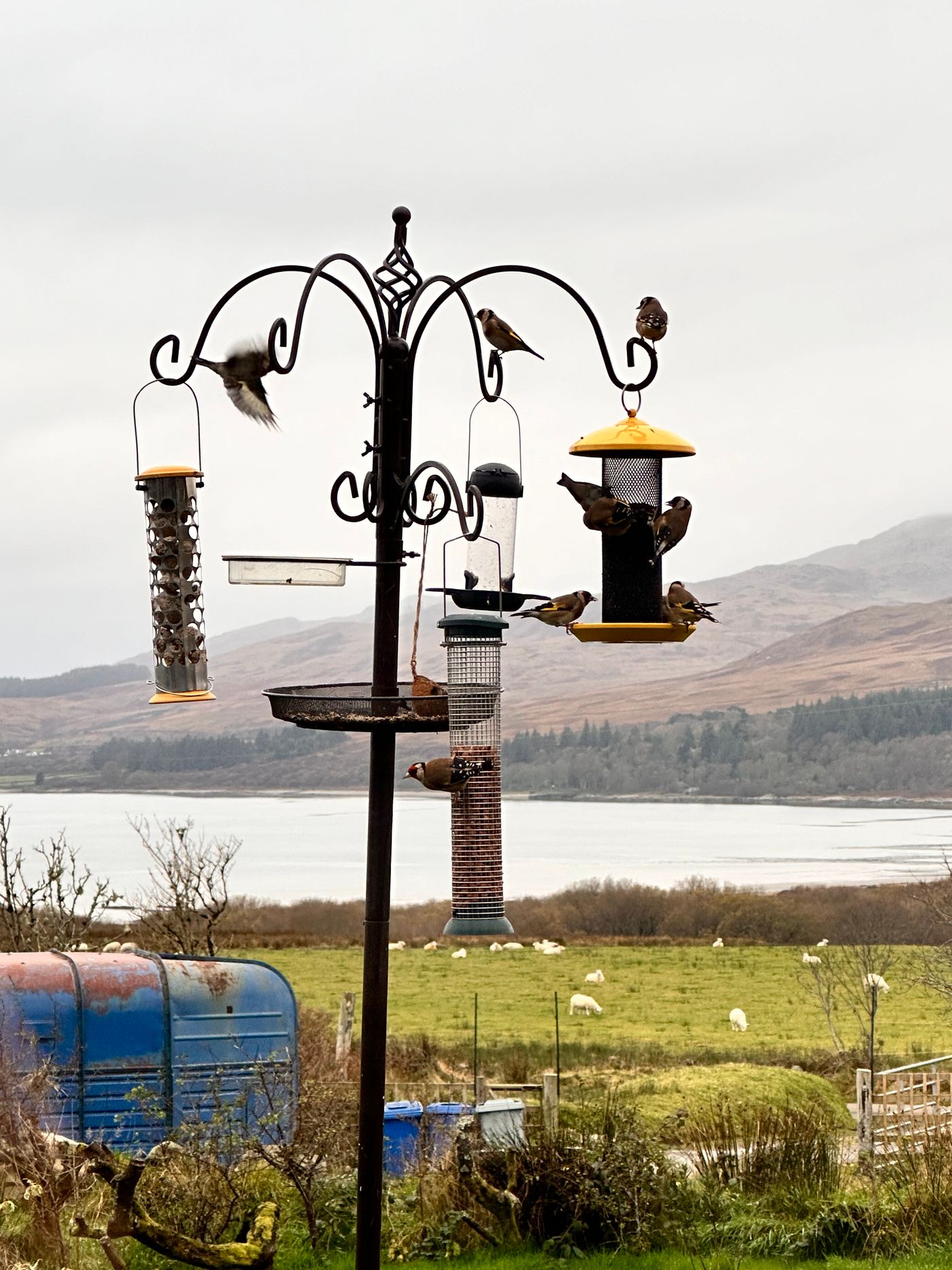
Birdwatching from the garden at Mrs Leonard's Cottage, Isle of Jura
Fig. 1Humans are guests on Jura. This is the land of eagles, seals, adders, otters, harriers. And you may see the odd deer.
01

5,000 red deer to 250 people

5,272 deer to 250 people. They walk through the retreat, silhouette against the Paps at dusk, and in autumn the stags roar across the hills from the hot tub.

The number that defines Jura: 5,272 red deer as of 2026, to 250 people. They outnumber us twenty to one. You will see them - on the road, in the garden, silhouetted against the Paps at dusk. Jura's herd is one of the purest bloodlines of wild red deer in Scotland.

In autumn, the rut. The stags roar across the hills from September to November - you'll hear them before you see them, often from the hot tub in the evening. Guests sometimes think something terrible is happening. It's not - it's just a stag letting every other stag know he's there. It happens right outside.

Seven estates manage the deer herd and stalking season runs August to February. This is important if you're planning to walk off-road during that period - stalkers are active in the hills and you need to know where they're working. It's not a problem and nobody will turn you away, you just need to check. We have all the estate numbers or you can find them on isleofjura.scot. A quick call in the morning before you head out is all it takes.
02

What you can see from the huts

Deer walk through the site daily. Bird feeders in the garden. Seals at Corran Sands. Otters at dawn if you're lucky. Eagles overhead. And a Dobsonian telescope for clear nights.

You don't need to leave to see wildlife. Here's what we see from the retreat on a regular basis:

Deer - daily. They wander through the site. The children don't even look up any more.

Birds - the Rusty Hut garden has feeders and the birds are abundant. The cottage garden has a bird table. Oystercatchers down at Corran Sands. Dippers and grey wagtails on the Corran River.

Seals - walk down to Corran Sands and look at the rocks. Grey seals haul out regularly. Bring binoculars.

Otters - possible at dawn along the coast. You need to be quiet, patient, and lucky - and most importantly, looking in the right direction. They're fast and low in the water. We see them a few times a year and it never gets old. Guests who spot one talk about it for the rest of their stay.

Eagles - look up. Golden eagles and white-tailed sea eagles both breed on Jura. You're more likely to see them in autumn and winter when the vegetation is thinner. Listen for the buzzards first - they're more common and easier to spot - then scan higher.

Stars - we have a 10" Dobsonian telescope for guests on clear nights. Winter is best - no light pollution for miles.

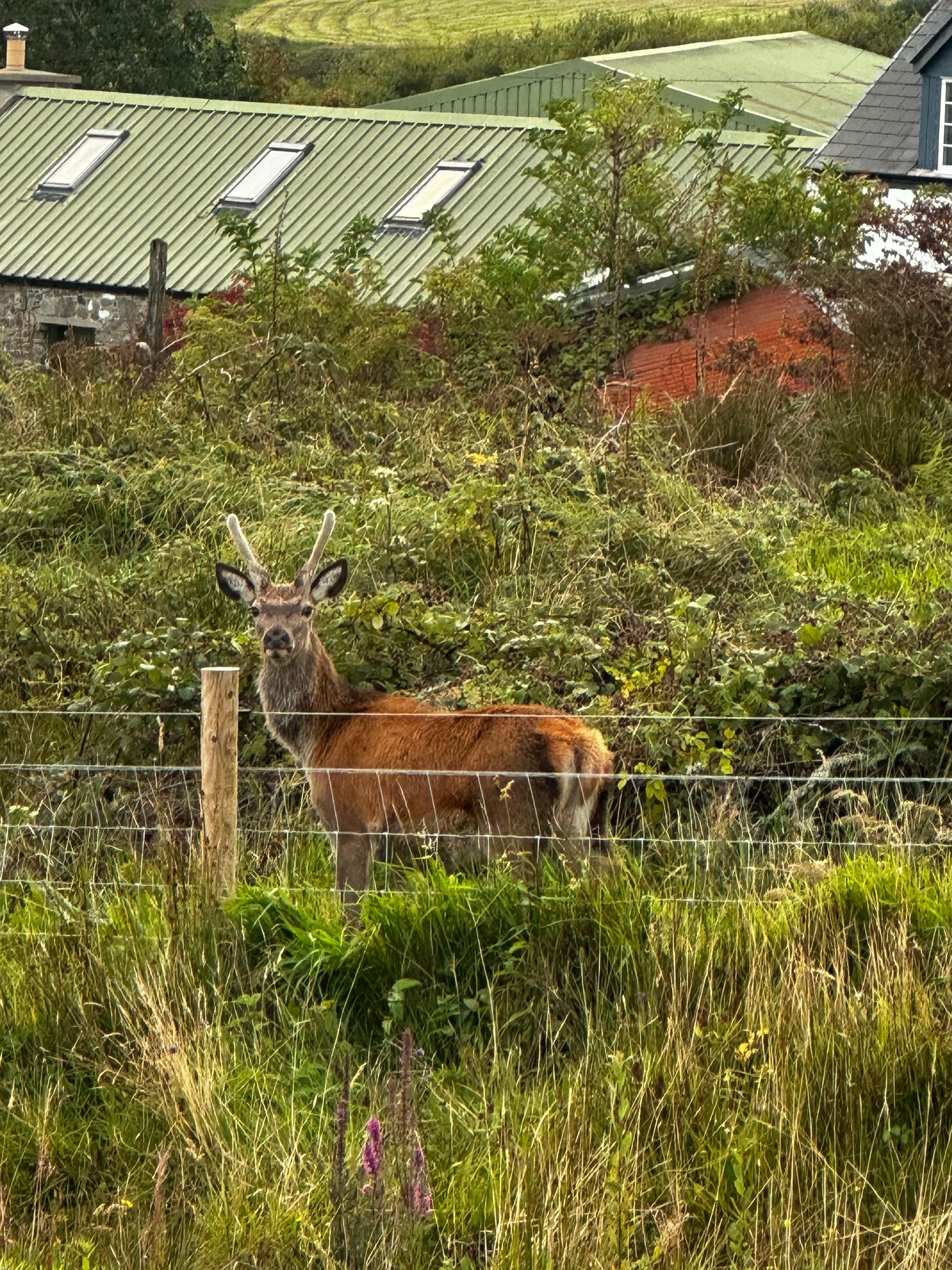
A young red deer stag in velvet standing at the fence line beside the huts at Knockrome
Fig. 2A young stag in velvet at the fence line · Knockrome
03

What to look for, season by season

Spring otters, summer sea birds, the autumn deer rut from the hot tub, winter eagles and dark skies. Every season on Jura has something worth coming for.

Every season has something. Here's what we've learned over the years:

Spring (March-May) — Lambing and calving on the crofts - keep dogs on leads. Otters with cubs along the coast - we've had our best sightings in April. Migrant birds arriving. Wildflowers on the machair. The island waking up.

Summer (June-August) — Sea birds nesting on the west coast cliffs. Seal pups at Lowlandman's Bay. Dolphins and porpoise in the Sound of Islay - Robert Henry's boat tours are the best way to see them. The longest days mean more time outside. Dawn is early, dusk is late, and the deer are everywhere.

Autumn (September-November) — The deer rut. This is the one. Stags roaring across the hills, audible from the hot tub on still evenings. Golden eagles most visible as the bracken dies back. Stalking season active - check with estates. The light starts getting dramatic.

Winter (December-February) — Hen harriers quartering the moorland. Short days, the sun low on the Paps with snow on them. The darkest skies for stargazing. Our telescope comes into its own. This is when Jura is at its most raw and most beautiful.

A red deer stag standing on the grass above the shore under a bare tree, Isle of Jura
Fig. 3A stag above the shore, under a bare tree

Places and people in this guide

Who to call · On Jura
Activity
Jura Boat Tours

Robert Henry knows these waters inside out. The Corryvreckan in full spring tide is extraordinary — if you're staying at Bothan Jura properties, this is a must.

+44 7768 450000www.juraboattours.co.uk

Wildlife on Jura — common questions

What wildlife will I see from the retreat?

Deer almost certainly - they walk through daily. Birds in the garden feeders. Oystercatchers and seals at Corran Sands. Otters are possible at dawn. Eagles overhead if you look up and get lucky.

Is there a stalking season?

August to February. The estates manage the deer herd. Check with them before walking off-road - we have all the contact numbers. It won't stop you walking, you just need to know where stalkers are working.

Can I see eagles on Jura?

Yes - both golden eagles and white-tailed sea eagles breed here. Most visible autumn and winter when the vegetation thins. Listen for buzzards first - they're more common - then look higher.

Are there adders on Jura?

Yes. Watch where you sit in summer, especially in heather and long grass. They're shy and will move away if they feel vibration, but keep dogs close on warm days.