Bothan Jura
Retreat
On JuraOn Jura edition

Dark Skies & Stargazing

Article3 min readBy Pi & LyntonKnockrome, Isle of Jura

We're just two people and two children with a big telescope, a fascination and a lot of dark sky.

The Isle of Jura has almost zero light pollution. With around 250 people, no streetlights outside Craighouse, and no major settlements for miles, the night sky here is among the darkest in Scotland.

The hot tub and sauna at Mrs Leonard's Cottage under a night sky, Isle of Jura
Fig. 1Mrs Leonard's · hot tub and sauna under the skies
01

Why the sky is so dark here

Almost no light pollution. A 10-inch Dobsonian telescope for guests. The Milky Way to the naked eye on clear winter nights. We'll set it up and point you in the right direction.

Jura's night sky is dark. There's no light pollution from the west, just the beating Atlantic all the way to America. To the north, empty moorland and to the east, the Kintyre Peninsular. Craighouse has a few streetlights that fringe Small Isles Bay, but from Knockrome, four miles north, you're in deep, inky darkness.

The best stargazing months are October to March — long nights, often clear between the weather fronts. Summer has the midnight twilight which is beautiful in a different way but not ideal for deep-sky viewing.

The telescope is free for all guests — just ask us and we'll set it up for you and show you how to put it away when you're finished (if rain is forecast). On a good night you can see Jupiter's moons, Saturn's rings, the Andromeda galaxy, Orion nebula and star clusters that look like a single point to the naked eye but explode into thousands through the lens. There is no such thing as empty space! We're not astronomers — we're just two people and two children with a big telescope, a fascination and a lot of dark sky — but we'll point you in the right direction.
02

Seeing the Northern Lights from Jura

The Northern Lights reach Jura occasionally in winter. You can't plan for it — but the hot tub is not a bad vantage point.

The Northern Lights reach Jura occasionally in winter. We've seen them a few times — green, shimmering over the land and reflected in the sea. You can't plan for it, but you can improve your chances: check the aurora forecast (AuroraWatch UK is free), pick a clear night between October and March, and get away from any lights. The hot tub is not a bad vantage point to while away a few hours skygazing.

If you see them, you'll remember it. If you don't, you'll still have one of the best night skies in Britain.

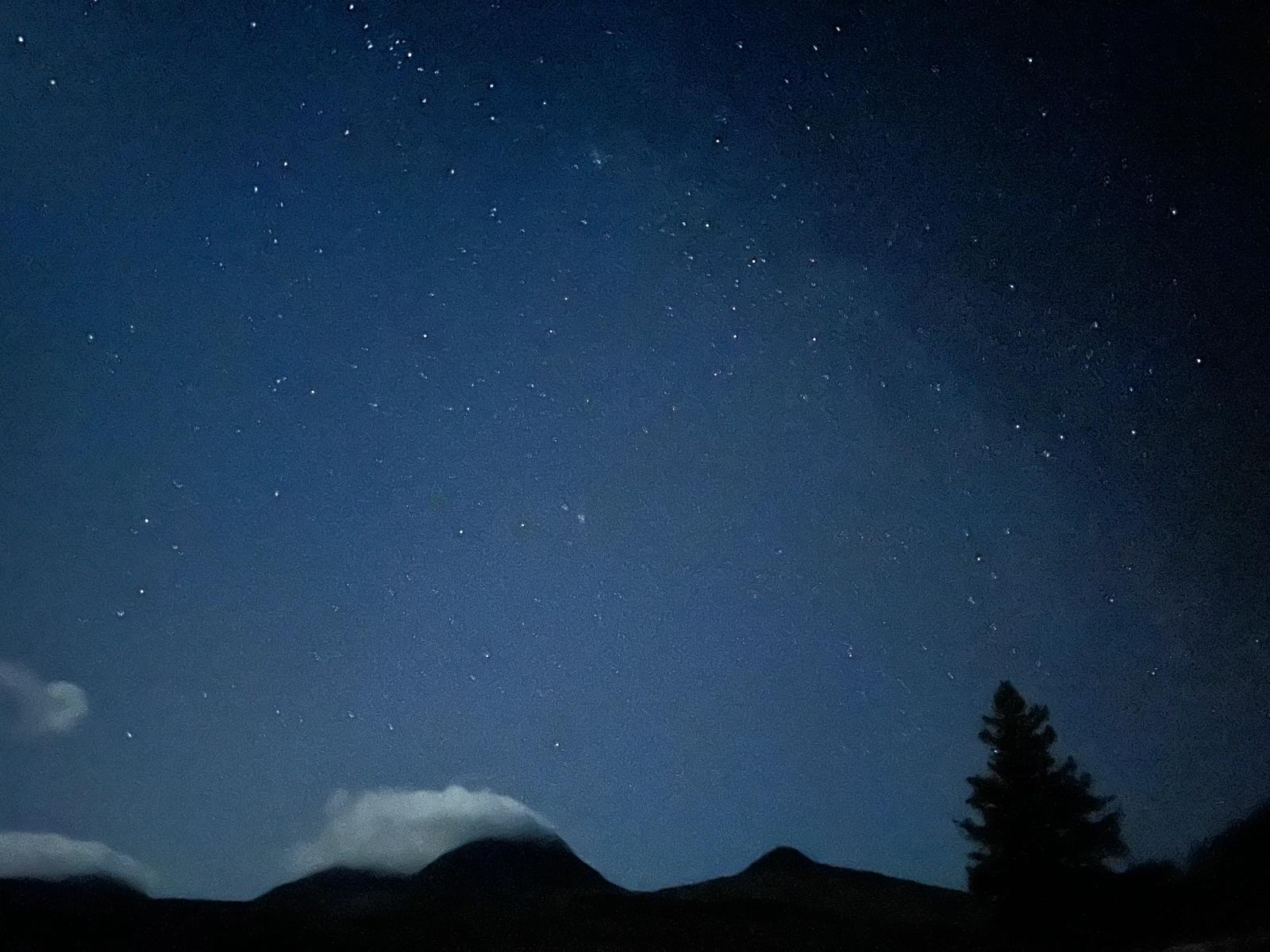
Starlight over the Paps of Jura with low cloud caught along the ridge
Fig. 2Low cloud along the ridge · the Paps under starlight
03

Photographing the night sky

Tripod, wide lens, clear night. The Paps against the Milky Way. We'll turn the site lights off if you're shooting.

If you're into astrophotography, Jura is a gift. A tripod, a wide lens, and a clear night is all you need. The Paps silhouetted against the Milky Way is the shot — set up on the road south of the retreat looking west, or walk up the back onto the hills. The different lenses we have mean you can get some pretty memorable shots if you have the right equipment to connect to it.

For star trails, the single-track road gives you a clean foreground with no light interference. For the Milky Way core, summer evenings (June-July) give you the galactic centre low on the southern horizon — though the twilight means you need to wait until midnight or later.

We're happy to leave the site lights off if you let us know you're shooting. Just ask.

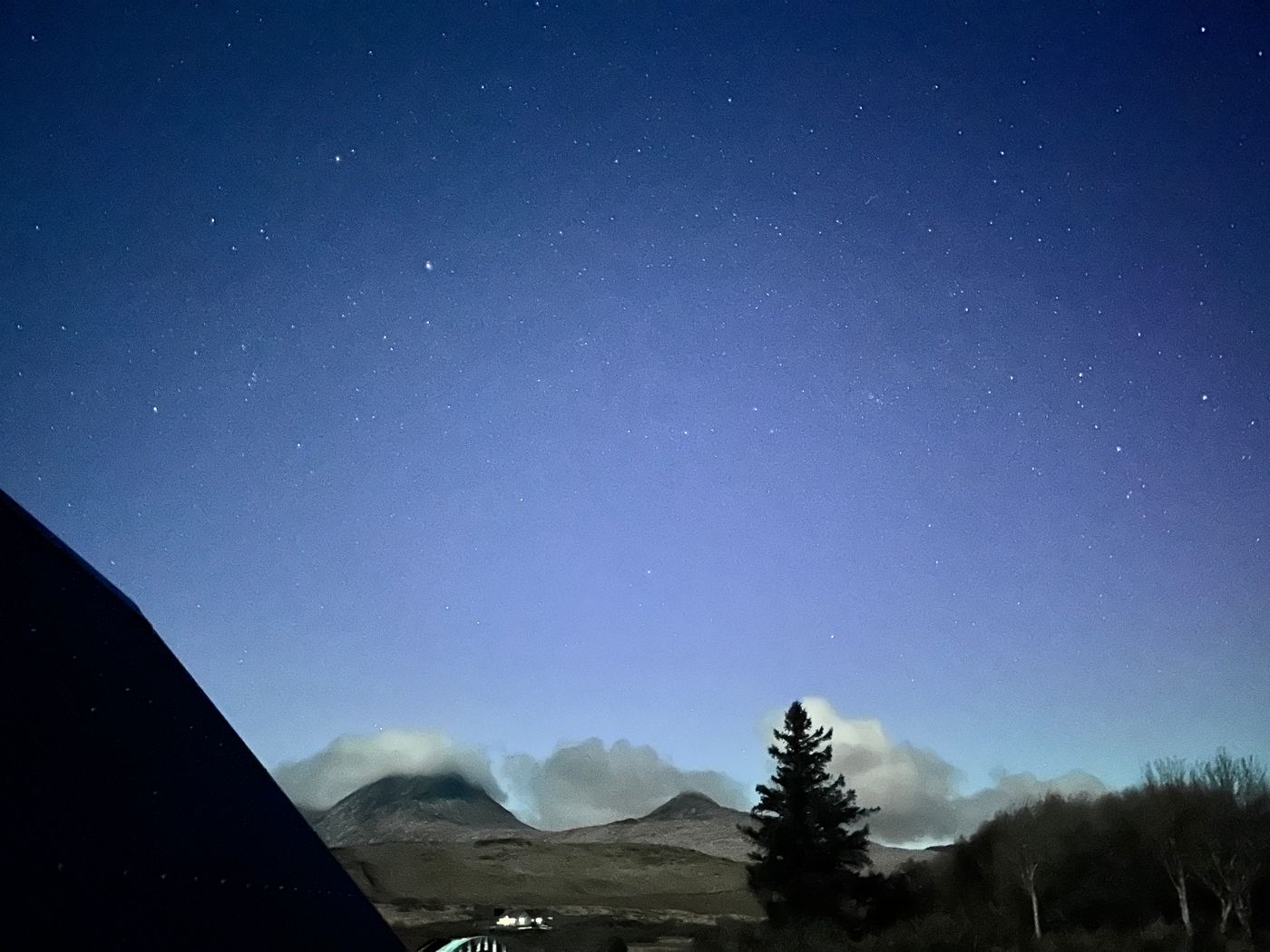
A dense field of stars above the silhouetted Paps of Jura, a single spruce on the skyline
Fig. 3A single spruce on the skyline · the Paps behind

Places and people in this guide

Who to call · On Jura

Dark Skies & Stargazing — common questions

Can I use the telescope?

Yes — free for all guests. Ask us and we'll set it up. We're not astronomers but we know where the good stuff is. Best on clear winter nights.

When is the best time for stargazing on Jura?

October to March — long nights, dark skies, often clear between weather fronts. The Milky Way is visible to the naked eye on good nights.

Can I see the Northern Lights from Jura?

Occasionally, in winter. Check AuroraWatch UK for forecasts. We've seen them a few times — green, shimmering, reflected in the sea. Worth hoping for.